

CRXEmulator extension is needed to make YouTube Video Downloader work properly.

CRXEmulator extension is needed to make YouTube Video Downloader work properly.
Our free Browser Extension allows you to download YouTube videos in different video qualities ranging from 360p to ultra high definition 4k. Supports all formats, including AVI, FLV, WebM, MP4 and MP3 without size and length limits.
CRXEmulator extension is needed to make YouTube Video Downloader work properly.
17.8.0
Version
March 5, 2026
Last update
17,219,949
Downloads

YouTube Videos downloaded in standard qualities

Download hi-res YouTube videos of up to 4k

Lose no quality as you convert & download YouTube videos

Trim & download any section of a YouTube video

Choose mp3 qualities from 64kbps-320kbps

Download YouTube Video thumbnail

Download YouTube subtitles as an .SRT file

Take YouTube screenshots in 4k Resolution

Use float view to watch your YouTube videos

Loop your YouTube videos for extra convenience

Play just audio from your YouTube videos
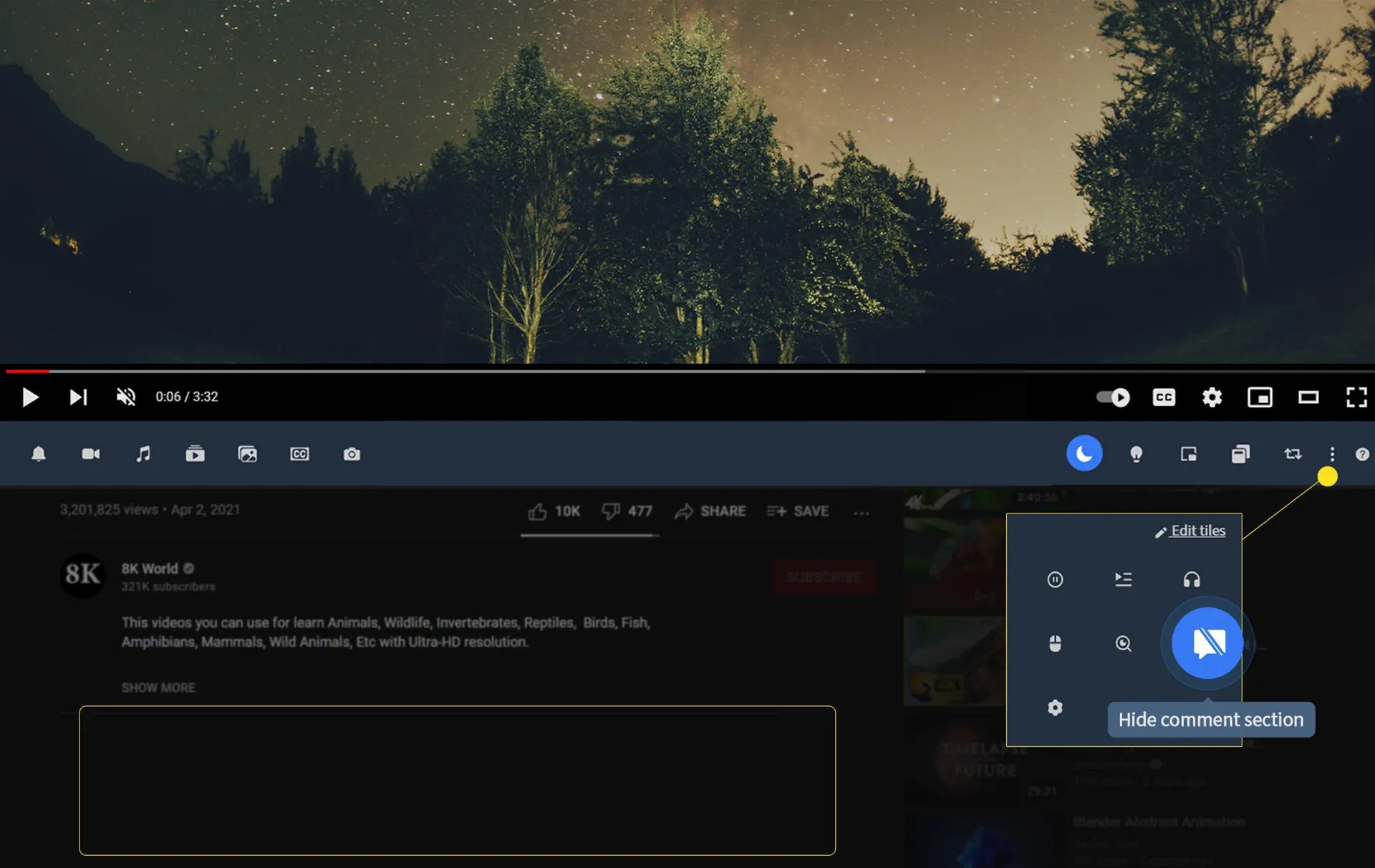
Easily hide YouTube video comments

Never Lose Your Place With Smart Pause

Set your preferred video quality for playback

Never miss a second of your videos with Smart Pause

Picture-in-picture functionality

Search for other YouTube videos while viewing another

Use dark mode with just a single click

Enhance Your YouTube videos with cinema mode
Ritual, aesthetics, and attention economy The internet privileges images and brevity. Rituals become shareable moments; deities become Instagrammable aesthetics. This has artistic and devotional benefits—beautiful iconography can awaken devotion, short explanatory videos can demystify complex rites—but it also interacts with the attention economy. Provocative headlines, sensational claims about miraculous powers, and controversy-driven engagement can distort religious discourse. Thoughtful platforms will resist the temptation to trade depth for clicks, offering layered content that rewards sustained attention.
The democratization of access The internet has radically expanded who can encounter Hindu teachings, rituals, and texts. Where once knowledge was transmitted through lineage-based teacher-student relationships, caste- and regionally-specific practices, and in-person communal worship, digital platforms open those traditions to anyone with a connection. “Hindulinks4u,” as a phrase, carries the promise of personalization—religion not confined to place or birth, but discoverable on demand. That democratization is powerful: seekers in diasporic communities can maintain ritual continuity; curious outsiders can study scriptures; isolated elders can stream pujas. The web flattens gatekeeping and empowers both preservation and innovation.
Safeguarding minority voices Hinduism’s diversity includes marginalized traditions—Adivasi practices, regional folk deities, lower-caste devotional movements—whose representation has often been limited in mainstream retellings. The internet can amplify those voices, but it can also homogenize. Curators should intentionally include plural narratives, employing inclusive editorial practices that surface underrepresented traditions and prevent the erasure of local practices by dominant narratives.
Commercialization and ethical concerns Commercial pressures complicate the picture. Religious content can be monetized through advertising, paid memberships, and branded events. When devotion becomes a revenue stream, conflicts of interest arise: are offerings motivated by spiritual service or market incentives? Ethical stewardship requires transparency about sponsorship, sensitivity to donors, and safeguarding against exploitative claims (miracles for a fee, guaranteed spiritual outcomes, etc.). Platforms that center reverence and ethical clarity will better earn trust.
Education and transmission A key opportunity is education. Thoughtfully curated digital resources—complete translations with contextual notes, multimedia courses, and intergenerational dialogue—can significantly raise the public’s understanding of texts and practices. For many young people raised in plural societies, online materials provide the bridge between ancestral traditions and contemporary life. The ideal digital offering treats teaching as apprenticeship: layered learning that situates scripture, ritual, and philosophy within their historical, linguistic, and social milieus.
Authority and authenticity But greater access brings thorny questions about authority. Who decides what counts as “authentic” Hindu practice? Canonical texts like the Vedas, Upanishads, Bhagavad Gita, and Puranas have long been interpreted through local customs, philosophical schools, and living lineages. Digital curation risks decontextualizing verses and rites, offering simplified or syncretic takes that may diverge from established interpretive traditions. “Links” imply selection—an editor’s taste, an algorithm’s bias. As readers click, they often encounter distilled summaries, devotional soundbites, or visually arresting ritual clips. Such formats can be entry points, but they can also ossify complex beliefs into consumable fragments. Readers and platform creators alike must balance accessibility with fidelity to context.
Cultural translation and diaspora identity For diasporic communities, sites like “Hindulinks4u” symbolize cultural anchors. They help translate rites into new contexts—how to observe Navratri in temperate climates, how to integrate ancestral festivals with school calendars, how to explain mythic narratives to children growing up amid contrasting values. Successful cultural translation doesn’t merely transplant rituals; it adapts meaning, sustaining core values while allowing forms to evolve. Digital spaces that honor both continuity and adaptive reinterpretation support resilient identity formation across generations.
A note on scholarship and humility Religious traditions flourish when study and devotion coexist. Digital platforms that foreground scholarship—primary texts, rigorous translations, historical-critical perspectives—alongside devotional content offer the richest soil. Presenting multiple viewpoints, acknowledging ambiguities, and citing sources cultivates humility. Curiosity, not certainty, should be the default posture in public religious pedagogy.
Ritual, aesthetics, and attention economy The internet privileges images and brevity. Rituals become shareable moments; deities become Instagrammable aesthetics. This has artistic and devotional benefits—beautiful iconography can awaken devotion, short explanatory videos can demystify complex rites—but it also interacts with the attention economy. Provocative headlines, sensational claims about miraculous powers, and controversy-driven engagement can distort religious discourse. Thoughtful platforms will resist the temptation to trade depth for clicks, offering layered content that rewards sustained attention.
The democratization of access The internet has radically expanded who can encounter Hindu teachings, rituals, and texts. Where once knowledge was transmitted through lineage-based teacher-student relationships, caste- and regionally-specific practices, and in-person communal worship, digital platforms open those traditions to anyone with a connection. “Hindulinks4u,” as a phrase, carries the promise of personalization—religion not confined to place or birth, but discoverable on demand. That democratization is powerful: seekers in diasporic communities can maintain ritual continuity; curious outsiders can study scriptures; isolated elders can stream pujas. The web flattens gatekeeping and empowers both preservation and innovation.
Safeguarding minority voices Hinduism’s diversity includes marginalized traditions—Adivasi practices, regional folk deities, lower-caste devotional movements—whose representation has often been limited in mainstream retellings. The internet can amplify those voices, but it can also homogenize. Curators should intentionally include plural narratives, employing inclusive editorial practices that surface underrepresented traditions and prevent the erasure of local practices by dominant narratives. hindulinks4u
Commercialization and ethical concerns Commercial pressures complicate the picture. Religious content can be monetized through advertising, paid memberships, and branded events. When devotion becomes a revenue stream, conflicts of interest arise: are offerings motivated by spiritual service or market incentives? Ethical stewardship requires transparency about sponsorship, sensitivity to donors, and safeguarding against exploitative claims (miracles for a fee, guaranteed spiritual outcomes, etc.). Platforms that center reverence and ethical clarity will better earn trust.
Education and transmission A key opportunity is education. Thoughtfully curated digital resources—complete translations with contextual notes, multimedia courses, and intergenerational dialogue—can significantly raise the public’s understanding of texts and practices. For many young people raised in plural societies, online materials provide the bridge between ancestral traditions and contemporary life. The ideal digital offering treats teaching as apprenticeship: layered learning that situates scripture, ritual, and philosophy within their historical, linguistic, and social milieus. Presenting multiple viewpoints
Authority and authenticity But greater access brings thorny questions about authority. Who decides what counts as “authentic” Hindu practice? Canonical texts like the Vedas, Upanishads, Bhagavad Gita, and Puranas have long been interpreted through local customs, philosophical schools, and living lineages. Digital curation risks decontextualizing verses and rites, offering simplified or syncretic takes that may diverge from established interpretive traditions. “Links” imply selection—an editor’s taste, an algorithm’s bias. As readers click, they often encounter distilled summaries, devotional soundbites, or visually arresting ritual clips. Such formats can be entry points, but they can also ossify complex beliefs into consumable fragments. Readers and platform creators alike must balance accessibility with fidelity to context.
Cultural translation and diaspora identity For diasporic communities, sites like “Hindulinks4u” symbolize cultural anchors. They help translate rites into new contexts—how to observe Navratri in temperate climates, how to integrate ancestral festivals with school calendars, how to explain mythic narratives to children growing up amid contrasting values. Successful cultural translation doesn’t merely transplant rituals; it adapts meaning, sustaining core values while allowing forms to evolve. Digital spaces that honor both continuity and adaptive reinterpretation support resilient identity formation across generations. and citing sources cultivates humility. Curiosity
A note on scholarship and humility Religious traditions flourish when study and devotion coexist. Digital platforms that foreground scholarship—primary texts, rigorous translations, historical-critical perspectives—alongside devotional content offer the richest soil. Presenting multiple viewpoints, acknowledging ambiguities, and citing sources cultivates humility. Curiosity, not certainty, should be the default posture in public religious pedagogy.

Install Extension In CRXEmulator
CRXEmulator extension is needed to make YouTube Video Downloader work properly.

Install Extension In CRXEmulator
CRXEmulator extension is needed to make YouTube Video Downloader work properly.

Install Extensions Directly
CRXEmulator extension is needed to make YouTube Video Downloader work properly.

Install Extension In CRXEmulator
CRXEmulator extension is needed to make YouTube Video Downloader work properly.

Install Extension In CRXEmulator
CRXEmulator extension is needed to make YouTube Video Downloader work properly.

Install Extension In CRXEmulator
CRXEmulator extension is needed to make YouTube Video Downloader work properly.
You Can Also Install this extension in Developer Mode
© 2026 Addoncrop.com All rights reserved
