

CREATE SYMBOLS, FOOTPRINTS, AND 3D MODELS FROM PRE-AUTHORED DATA

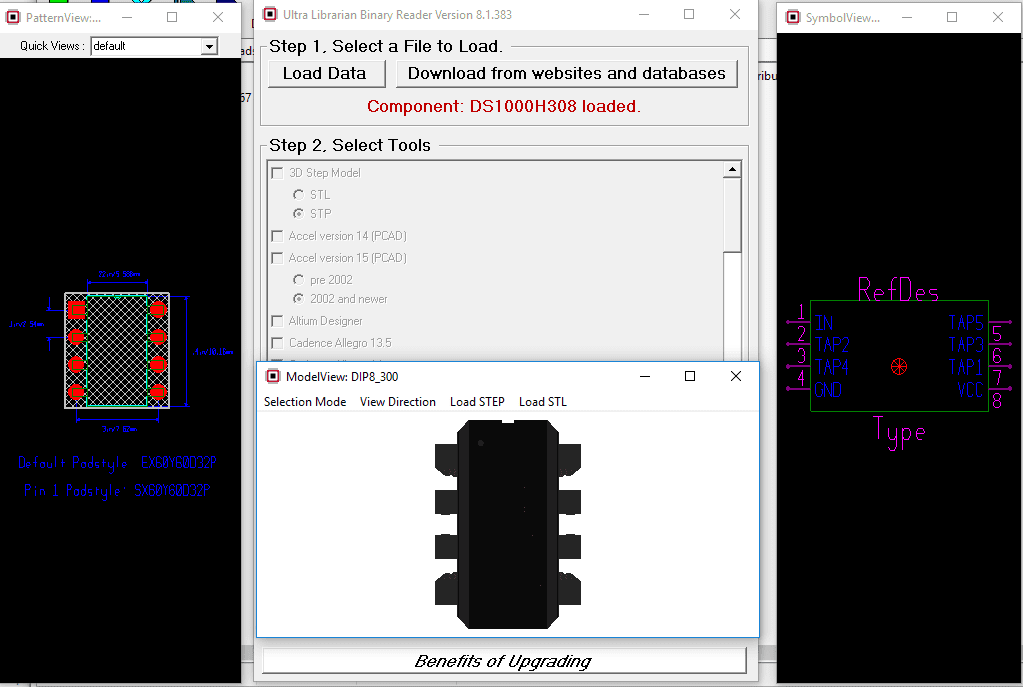
ULTRA LIBRARIAN FREE READER

Preview models prior to downloading

Choose from over 20 different CAD export options

appu raja 1990 hindi movie download exclusive
CONVERT BXL FILES INTO YOUR PREFERRED CAD FORMAT

The free reader is a lite version of Ultra Librarian specifically designed to import vendor neutral CAD data (.bxl files) from manufacturers’ websites and then export symbols, footprints, and 3D models to specific CAD tool formats. The reader is a read-only tool and will not allow users to make any changes to the data. For symbols, footprints, and 3D model creation capabilities, use one of the Ultra Librarian Desktop Software options.

BXL FILES FROM YOUR FAVORITE IC MANUFACTURERS

Many of our IC partners offer BXL files for their components directly on their websites. Once you have obtained a BXL file it is quick and easy to convert to your preferred CAD format through our online BXL conversion tool.

Check out all manufacturers here.

EXPORT TO OVER 30 DIFFERENT CAD FORMATS

VENDOR NEUTRAL FILES

Accel EDA 14 & 15

  • DesignSpark
  • Mentor Graphics
  • BoardStation
  • Mentor Graphics Design Architect
  • Mentor Graphics Design
  • Expedition 99 and 2000
  • PCAD 2000, 2001, 2002, 2004, and 2006
  • STL
  • TARGET 3001!
  • View Logic ViewDraw
  • Zuken CadStar 3 and 4
  • Zuken CR-5000 and CR-8000

FREQUENTLY ASKED QUESTIONS

A .BXL file contains electronic data created by Ultra Librarian in a universal format and is used for distributing PCB information. .BXL files can be opened by the Ultra Librarian Free Reader and translated into your choice of 22 different CAD formats.

Ultra Librarian has partnered with major IC manufacturers to create electronic data representing their parts and are available to the public. Partners include Analog Devices, Texas Instruments, Microchip, Maxim, Silicon Labs, Renesas, Exar, and NXP.

Yes, you can use our Online Reader if you don’t want to download the Free Reader

Free Reader

"*" indicates required fields

On an evening when the sky held the soft bruised colors of a departing monsoon, an old woman from the market came to him with a parcel. Inside was a poster — one of Appu’s first, the inks faded but the signature still sharp. "You taught my granddaughter to speak," she said. "She won't forget." Appu accepted the poster like a benediction. He realized then that the measure of a life wasn't box-office totals or glittering awards but the quiet pulse of small changes: a child who no longer feared the stage, a neighbor who chose honesty over silence, a town that learned to tell its own stories.

Filming this time took him farther — across monsoon-swollen rivers and under skies that changed like actors shifting masks. He learned to carry his small town within him; when the director needed a scene remembering home, Appu closed his eyes and the smell of jasmine and frying spices came like a ready-made prop. Offscreen, he collected small stories — of a tea vendor who sang opera to drown loneliness, of a tailor who embroidered tiny hopes into lining pockets — and slipped them into Meera’s scripts like talismans.

Appu sat beneath the mango tree, feet tucked under him, and watched a rehearsal. The wind moved the leaves and the script pages fluttered like little birds. He had chased a dream and found it had followed him home — not as a trophy but as a trail of other people’s courage. That, he thought, was enough.

He borrowed a shirt from his cousin, buttoned it with trembling fingers, and boarded the morning train with two rupees and a hand-stitched portfolio of posters. The city overwhelmed him — a tide of faces, the smell of frying spices, and the glitter of posters announcing stars he’d worshipped from afar. At the audition hall, hopefuls practiced monologues with practiced aggression; they wore confidence like armor. Appu waited his turn, and when it came, he spoke as if reciting a prayer about a man who chooses kindness over pride. The director, a woman named Meera with wise eyes and a cigarette stub tucked behind her ear, asked him a single question: "Why do you want this role?" Appu answered honestly: "To tell a truth that might help someone like me."

One winter, a letter arrived from the city: Meera had made another film and wanted Appu to audition again. He hesitated. The house by the mango tree had taken root; the workshops were thriving. He also remembered the boy on the platform who had once believed the world was a place for him. He chose both. He accepted the part but set boundaries: he would leave only after town festivals and return for the harvest.


the pcb design, assembly, and trends blog

RELATED CONTENT

Appu Raja 1990 Hindi Movie Download Exclusive __link__ Online

On an evening when the sky held the soft bruised colors of a departing monsoon, an old woman from the market came to him with a parcel. Inside was a poster — one of Appu’s first, the inks faded but the signature still sharp. "You taught my granddaughter to speak," she said. "She won't forget." Appu accepted the poster like a benediction. He realized then that the measure of a life wasn't box-office totals or glittering awards but the quiet pulse of small changes: a child who no longer feared the stage, a neighbor who chose honesty over silence, a town that learned to tell its own stories.

Filming this time took him farther — across monsoon-swollen rivers and under skies that changed like actors shifting masks. He learned to carry his small town within him; when the director needed a scene remembering home, Appu closed his eyes and the smell of jasmine and frying spices came like a ready-made prop. Offscreen, he collected small stories — of a tea vendor who sang opera to drown loneliness, of a tailor who embroidered tiny hopes into lining pockets — and slipped them into Meera’s scripts like talismans. appu raja 1990 hindi movie download exclusive

Appu sat beneath the mango tree, feet tucked under him, and watched a rehearsal. The wind moved the leaves and the script pages fluttered like little birds. He had chased a dream and found it had followed him home — not as a trophy but as a trail of other people’s courage. That, he thought, was enough. On an evening when the sky held the

He borrowed a shirt from his cousin, buttoned it with trembling fingers, and boarded the morning train with two rupees and a hand-stitched portfolio of posters. The city overwhelmed him — a tide of faces, the smell of frying spices, and the glitter of posters announcing stars he’d worshipped from afar. At the audition hall, hopefuls practiced monologues with practiced aggression; they wore confidence like armor. Appu waited his turn, and when it came, he spoke as if reciting a prayer about a man who chooses kindness over pride. The director, a woman named Meera with wise eyes and a cigarette stub tucked behind her ear, asked him a single question: "Why do you want this role?" Appu answered honestly: "To tell a truth that might help someone like me." "She won't forget

One winter, a letter arrived from the city: Meera had made another film and wanted Appu to audition again. He hesitated. The house by the mango tree had taken root; the workshops were thriving. He also remembered the boy on the platform who had once believed the world was a place for him. He chose both. He accepted the part but set boundaries: he would leave only after town festivals and return for the harvest.