Our Clients




















The proliferation of 4K video content has created new challenges for video transmission and storage. With a resolution of 3840 x 2160 pixels, 4K video requires significantly more bandwidth and storage capacity compared to lower resolutions. To address this challenge, various data transfer protocols have been developed, including FC2, Ethernet, and TCP/IP. FC2, a high-speed storage networking protocol, has been widely adopted in data centers and storage networks. However, its performance in 4K video transmission has not been thoroughly evaluated.
FC2 is a high-speed protocol designed for storage networking, offering high bandwidth and low latency. It operates at a speed of up to 32 Gbps and uses a lossless, connection-oriented transmission scheme. Ethernet and TCP/IP, on the other hand, are widely used protocols for general-purpose networking. Ethernet offers a lower cost and simpler implementation compared to FC2 but may incur higher latency and packet loss. TCP/IP, a transport-layer protocol, provides reliable data transfer but may introduce additional overhead.
To evaluate the performance of FC2, Ethernet, and TCP/IP in 4K video transmission, we set up a testbed consisting of a 4K video source, a sender node, and a receiver node. We used a 4K video codec to encode and decode the video stream. The sender node transmitted the encoded video stream using each protocol, while the receiver node recorded the received video stream. We measured latency, packet loss, and video quality metrics, including PSNR (Peak Signal-to-Noise Ratio) and SSIM (Structural Similarity Index).
Our results show that FC2 outperforms Ethernet and TCP/IP in terms of latency and packet loss. FC2 achieved an average latency of 1.2 ms, compared to 3.5 ms and 5.2 ms for Ethernet and TCP/IP, respectively. Packet loss rates for FC2, Ethernet, and TCP/IP were 0.05%, 0.15%, and 0.3%, respectively. In terms of video quality, FC2 achieved an average PSNR of 42.1 dB and SSIM of 0.98, compared to 39.2 dB and 0.95 for Ethernet, and 37.5 dB and 0.92 for TCP/IP.
Future studies can investigate the performance of other protocols, such as InfiniBand and RDMA (Remote Direct Memory Access), in 4K video transmission. Additionally, we can explore the use of machine learning and deep learning techniques to optimize video transmission and improve video quality.


TMBill is a leading cloud-based end to end technology solutions for the Restaurants, Bar, Cafe, QSR, Ice-cream Shop, Bakery, and Cake Shop.
TMBill helps all types of food businesses, from a standalone food outlet to a large food chain, manage functions like Billing, QR Code Ordering Platform, CRM, Customer Loyalty, Aggregators integrations, Analytics, Inventory, Recipe, and Wastage Management, Centralized Menu Management, Vendor Management and more. we have successfully registered a global presence, with more than 12000+ customers in over 350+ cities and 30+ countries.
We are the first company to provide a complete online cloud POS solution for restaurants on Desktop and Mobile Devices."



Powering 12000+ Restaurants

12000+
Happy Restaurants

30+
Countries

1M+
Daily Orders World wide

1
Platform

























The proliferation of 4K video content has created new challenges for video transmission and storage. With a resolution of 3840 x 2160 pixels, 4K video requires significantly more bandwidth and storage capacity compared to lower resolutions. To address this challenge, various data transfer protocols have been developed, including FC2, Ethernet, and TCP/IP. FC2, a high-speed storage networking protocol, has been widely adopted in data centers and storage networks. However, its performance in 4K video transmission has not been thoroughly evaluated.
FC2 is a high-speed protocol designed for storage networking, offering high bandwidth and low latency. It operates at a speed of up to 32 Gbps and uses a lossless, connection-oriented transmission scheme. Ethernet and TCP/IP, on the other hand, are widely used protocols for general-purpose networking. Ethernet offers a lower cost and simpler implementation compared to FC2 but may incur higher latency and packet loss. TCP/IP, a transport-layer protocol, provides reliable data transfer but may introduce additional overhead. 4k fc2
To evaluate the performance of FC2, Ethernet, and TCP/IP in 4K video transmission, we set up a testbed consisting of a 4K video source, a sender node, and a receiver node. We used a 4K video codec to encode and decode the video stream. The sender node transmitted the encoded video stream using each protocol, while the receiver node recorded the received video stream. We measured latency, packet loss, and video quality metrics, including PSNR (Peak Signal-to-Noise Ratio) and SSIM (Structural Similarity Index). The proliferation of 4K video content has created
Our results show that FC2 outperforms Ethernet and TCP/IP in terms of latency and packet loss. FC2 achieved an average latency of 1.2 ms, compared to 3.5 ms and 5.2 ms for Ethernet and TCP/IP, respectively. Packet loss rates for FC2, Ethernet, and TCP/IP were 0.05%, 0.15%, and 0.3%, respectively. In terms of video quality, FC2 achieved an average PSNR of 42.1 dB and SSIM of 0.98, compared to 39.2 dB and 0.95 for Ethernet, and 37.5 dB and 0.92 for TCP/IP. FC2, a high-speed storage networking protocol, has been
Future studies can investigate the performance of other protocols, such as InfiniBand and RDMA (Remote Direct Memory Access), in 4K video transmission. Additionally, we can explore the use of machine learning and deep learning techniques to optimize video transmission and improve video quality.

IT Head
Joe’s Cafe KSA

-> Works both Offline & Online.
-> Lightning fast order taking with a cloud POS that backs up your data, let’s you operate remotely and keeps your data secure.
No space for bulky hardware. Take orders as they come and keep up the energy of a busy service.
-> Manage multiple stores with diffrent menu items.
-> Track oultet on Mobile Device.
Easy to use on all mobile devices, simple UI/UX.
TMBill Atlantic POS is available for Android(Mobiles/Tabs) and Windows(Desktop/Laptop).
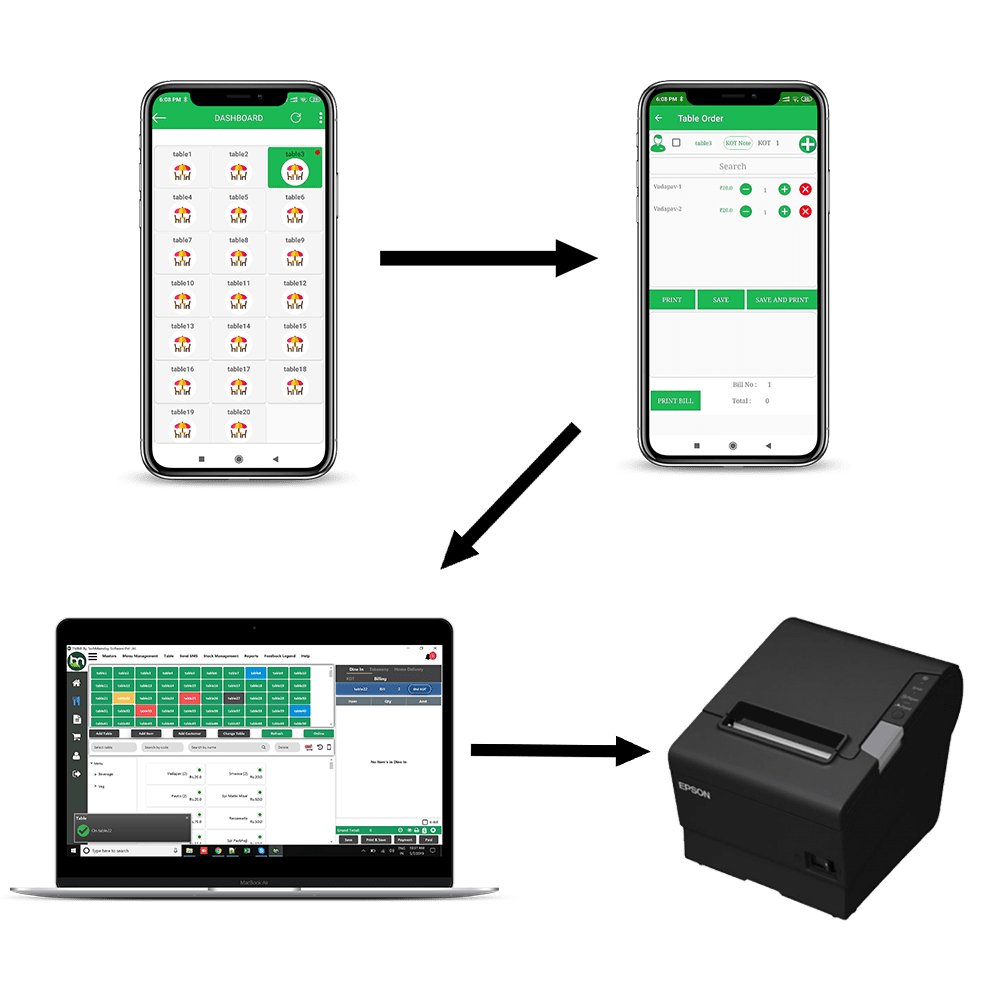
Wireless Ordering Support On Android Mobiles And Tabs.
Punch The Order And Print It In Kitchen Directly.
Captain Takes Order Of Running Table With Clicks.
Easy To Use On All Mobile Devices, Simple UI/UX.
Customizable, Transaction-Based Loyalty Program To Encourage Repeat Customers.
Get Closer To The Customer Like Never Before Through Personalized High-Quality Customer Interactions. Say The Right Thing At The Right Time With Automated Customer Segmentation.
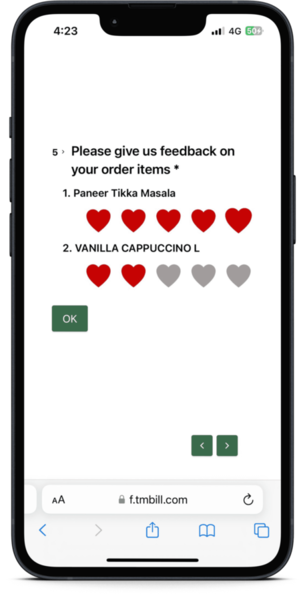
A Refreshing Chat-Based Interface With Customizable & Personalized Forms For More Intelligent Responses.
Poonch or Punch is a district in Jammu and Kashmir, India. With headquarters the town of Poonch, it is bounded by the Line of Control on three sides. The 1947-48 war between India and Pakistan divided the earlier district into two parts.
The other traditional dishes that are a must-try in Jammu Region are Morel (Gushi) Palov, Madra (lintel cooked in curd), Oria (Potato/Pumpkin in mustard sauce), Maani, Khameera, Katha Meat (Sour Mutton), Shasha(raw mango chatni), Kasrod and Timru-di-Chatni,Shiri Pulav, and Mitha Bhat (Sweet Rice).